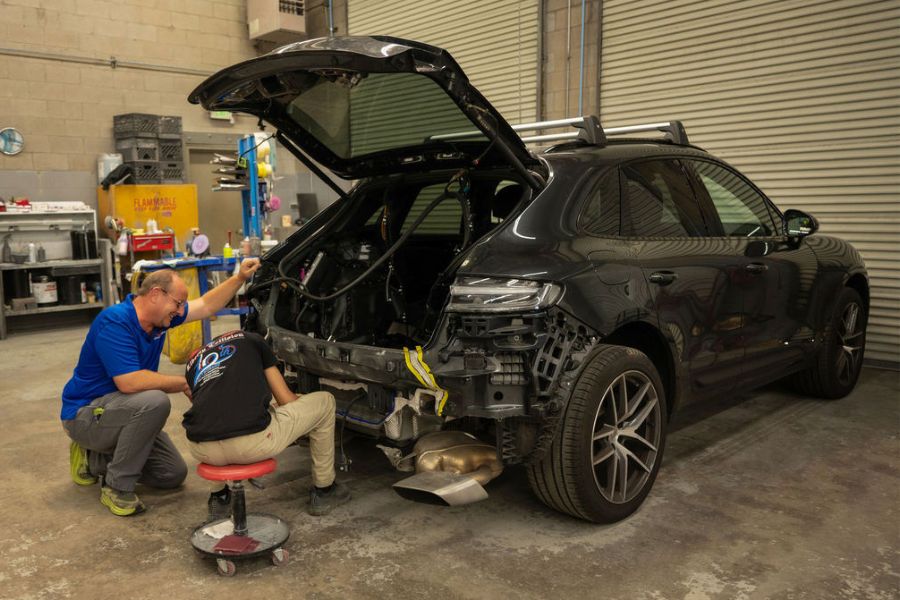
When you are in a collision, it is normal to focus on what you can see. Crumpled fender, broken glass, scraped paint. The problem is that the most serious damage is often hidden deep inside your vehicle, especially on today’s advanced cars, trucks, and SUVs.
That is where OEM safety inspections come in. Using modern diagnostic tools, Liberty Collision in Sparks, NV, ensures your vehicle is repaired correctly, not just made to look good again.
In this guide, we will break down what OEM safety inspections are, why they matter so much, and how they fit into your collision repair process in Reno and Sparks.
What Is An OEM Safety Inspection After A Collision?
OEM safety inspections are specific checks required or recommended by your vehicle’s manufacturer after an accident. These instructions are found in the automaker’s repair procedures and can include:
- Measuring or replacing certain parts
- Running advanced diagnostic scans
- Inspecting safety systems that may not show visible damage
In other words, an OEM safety inspection is the automaker’s checklist for “Is this vehicle truly safe to drive again after a crash?”
These procedures are especially important for modern vehicles with advanced driver assistance systems, complex steering components, and sensitive electronics that cannot be evaluated with a quick visual look.
Why OEM Safety Inspections Matter For Your Safety & Your Family
OEM Collision Safety Inspections Help Confirm Your Car Will Protect You In The Next Crash
Your vehicle is designed to crumple, bend, and redirect impact forces in a very specific way. When parts like the frame, steering column, or airbag sensors are damaged, your vehicle may not protect you the way it was engineered to in a future collision.
Following OEM repair procedures helps:
- Restore crash performance as the manufacturer intended
- Confirm safety systems are still functioning properly
- Reduce the risk of hidden damage causing problems later
Post-Collision OEM Inspections Catch Hidden Damage You Cannot See
Some of the most important safety issues are not obvious, such as:
- Internal damage to a steering gear
- Slightly bent suspension components
- Cracked or stressed welds and structural sections
- Sensors that are out of alignment or not communicating
These concerns can create a vehicle that “seems fine” on a short drive, yet behaves unpredictably in an emergency or during another impact.
Key Components Checked During A Post-Collision OEM Safety Inspection
Every vehicle and collision is different, which is why Liberty Collision refers to the specific OEM repair information for your make and model. In general, many post-collision safety inspections will focus on the areas below.
Steering Column Inspections After A Crash
Many manufacturers call for the steering column to be inspected, measured, or replaced after certain types of collisions. The steering column is designed to collapse in a controlled way during an impact to help protect the driver.
If the steering column has collapsed or extended beyond specification, it may not perform properly in a future crash. Measuring it according to OEM specs helps us decide whether it is safe to reuse or needs replacement.
Steering Gears, Suspension, & Alignment Checks
Impacts to the front or rear of the vehicle can damage:
- Steering gears and racks
- Control arms and suspension links
- Subframes and mounting points
Even if everything looks straight, internal gear teeth or bushings can be damaged by shock loads. OEM procedures often recommend inspections or replacement of steering components when there is evidence of impact.
Airbags, Seatbelts, & Restraint System Safety Checks
Your airbag and seatbelt systems are carefully calibrated. After an accident, OEM safety inspections can include:
- Scanning for airbag and restraint system codes
- Inspecting seatbelt pretensioners and anchors
- Checking impact sensors and control modules
If these parts are not inspected and repaired according to OEM guidelines, you may be driving with compromised protection without even realizing it.
ADAS, Diagnostic Scanning, & Electrical System Inspections
Modern vehicles rely on advanced driver assistance systems (ADAS) and complex electronic networks to keep you safe. These features may include:
- Blind spot monitoring
- Lane keep assist
- Parking sensors
- Adaptive cruise control
A collision can knock sensors out of alignment or damage wiring, even if the bumper or body panel looks fine. That is why Liberty Collision performs diagnostic scanning and works in line with manufacturer procedures to identify hidden issues in these systems.
Frame, Structural, & Glass Inspections
During an OEM-focused safety inspection, we may also evaluate:
- Frame and unibody structure for buckling, twist, or tears
- Welds and sectioning locations for proper strength
- Windshield and glass integrity, since they contribute to roof strength and airbag performance
All of these elements are part of what protects you in another collision, so they must be inspected and repaired correctly.
How Liberty Collision Handles OEM Safety Inspections In Reno & Sparks
Locally Owned Collision Repair Focused On Safe, Proper Repairs
Liberty Collision is a locally grown, family-owned collision repair shop serving Reno, Sparks, and the surrounding northern Nevada area. Our mission is to provide high-quality, safe, and proper repairs with honest communication for every customer.
We combine over 30 years of collision repair experience with ongoing training so our team stays current with modern repair techniques and OEM expectations.
OEM Focused Collision Repair Services We Provide
Our services that support safe, OEM-level collision repairs include:
- Collision repair and frame straightening for structural integrity
- Diagnostic scanning to check electronic safety systems and fault codes
- Glass repair and replacement when windshields or windows are damaged
- Paint repair and dent repair to restore appearance and protect against rust
- Storm damage repair for hail, wind, and debris impacts is common in northern Nevada
Following OEM safety inspections is part of how we return your vehicle as close as possible to pre-accident condition.
When Should You Ask For An OEM Safety Inspection?
If you have been in any of the situations below, you should talk to your collision repair shop about OEM safety inspections:
- Front or rear-end collision
- Significant side impact
- Airbag deployment
- Visible frame or structural damage
- Alignment suddenly feels off after a crash
- Any impact that affected suspension, steering, or safety features
Even at lower speeds, hidden damage can exist. It is always better to confirm that your vehicle is safe rather than assume everything is okay because it still drives.
What To Expect When You Bring Your Vehicle To Liberty Collision
When you bring your vehicle to Liberty Collision in Sparks after an accident:
- We inspect visible damage and listen to your concerns about how the vehicle feels or behaves.
- We research the OEM repair procedures for your specific make and model.
- We create a detailed repair plan, including any required safety inspections, measurements, or scans.
- We communicate with your insurance company and provide documentation supporting the repair plan.
- We perform the repairs using modern equipment and OEM-focused methods, then complete quality checks before returning your vehicle.
Our goal is to give you peace of mind that your vehicle is safe for you and your family, not just “good enough” to look fixed.
Choose Liberty Collision In Reno & Sparks For OEM Level Safety Inspections
OEM safety inspections after a collision are not an “extra” or a luxury. They are a critical part of making sure your vehicle is safe, structurally sound, and ready to protect you in the future.
If you have been in an accident in Reno or Sparks and want a collision repair shop that takes OEM procedures and safety seriously, Liberty Collision is here to help.
Contact us today to schedule an estimate or ask questions about your repair.
Related Posts
Join Our Newsletter Today
Insider News & Vehicle Tips
