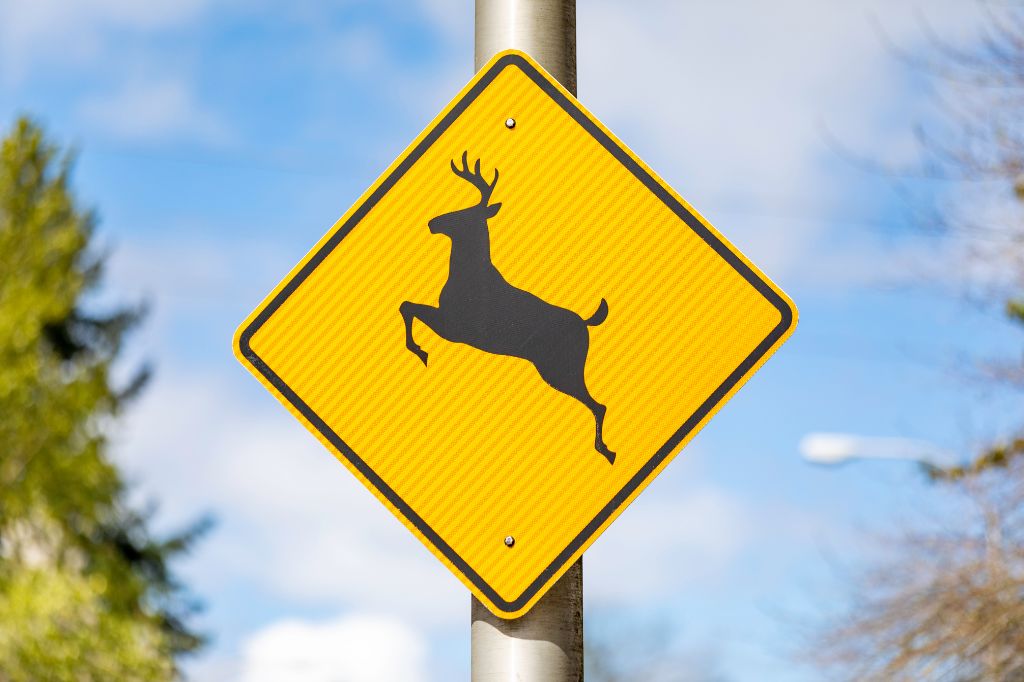
Mule deer migration ramps up across Northern Nevada every fall, and with it comes a predictable rise in animal-related collisions on roads around Reno, Sparks, and the foothills leading into the Sierra. September through November is peak season, and drivers who have never hit a deer are often caught off guard by how much damage a single strike can cause.
Liberty Collision has repaired vehicles after animal strikes for over 30 years, and the same questions come up every fall: what to do in the moment, what insurance actually covers, and what kind of damage is hiding behind a dented bumper.
Why Deer Collisions Spike in Nevada Every Fall
Mule deer move to lower elevations as temperatures drop, crossing roads and highways around Reno and Sparks in search of food and winter range. That migration overlaps with shorter daylight hours, which pushes more deer activity into dawn and dusk, exactly when visibility is worst for drivers.
Roads near open space, foothills, and rural stretches outside the city core see the highest number of strikes, but deer show up in surprisingly developed areas too, especially near greenbelts and river corridors that cut through town.
What to Do Immediately After Hitting a Deer
- Pull over safely and turn on hazard lights before checking on passengers or the vehicle
- Do not approach the animal. An injured deer can be unpredictable and dangerous
- Call local authorities if the deer is blocking the road or if anyone is injured
- Take photos of the vehicle damage and the scene while it is still fresh
- Contact your insurance company promptly, since most deer strikes fall under comprehensive coverage rather than collision
Nevada Deer Accident Insurance Claims: What Drivers Should Expect
Most drivers assume a deer strike works like a typical fender bender, but it usually falls under a different part of the policy. Comprehensive coverage, not collision coverage, typically applies to animal strikes, which matters for your deductible and how the claim gets processed.
Nevada law also gives you the right to choose your own repair shop, regardless of which shop your insurance company recommends. That choice matters more than most drivers realize, especially with the kind of hidden damage animal strikes tend to cause.
The Hidden Damage Behind a Deer Strike
A deer strike often looks like cosmetic bumper damage on the surface, but the impact frequently pushes further into the vehicle than it appears. Diagnostic scanning after any collision checks the vehicle’s onboard systems for issues that are not visible from a walk-around, including sensors tied to safety systems like automatic braking and lane assist.
Radiator support, headlight housings, and front-end sensors sit right where most deer strikes make contact, and a shop that only repairs what is visible can miss damage that shows up weeks later as a check engine light or a system malfunction.
Why Parts Quality Matters After an Animal Strike
Insurance companies sometimes push for aftermarket parts to keep repair costs down, but those parts are not built to the same specifications as the originals. OEM parts match your vehicle’s exact fit and safety performance, which matters most in the areas a deer strike typically hits: bumpers, headlights, and the sensors mounted behind them.
Liberty Collision: Animal Collision Repair in Reno & Sparks
If a deer strike left your vehicle with damage this fall, Liberty Collision has the training and equipment to check for what is not visible on the surface, not just repair what is. Nevada gives you the right to choose your repair shop after any accident, deer strikes included. Visit Liberty Collision today to schedule your estimate before deer season peaks.
Related Posts
Join Our Newsletter Today
Insider News & Vehicle Tips
